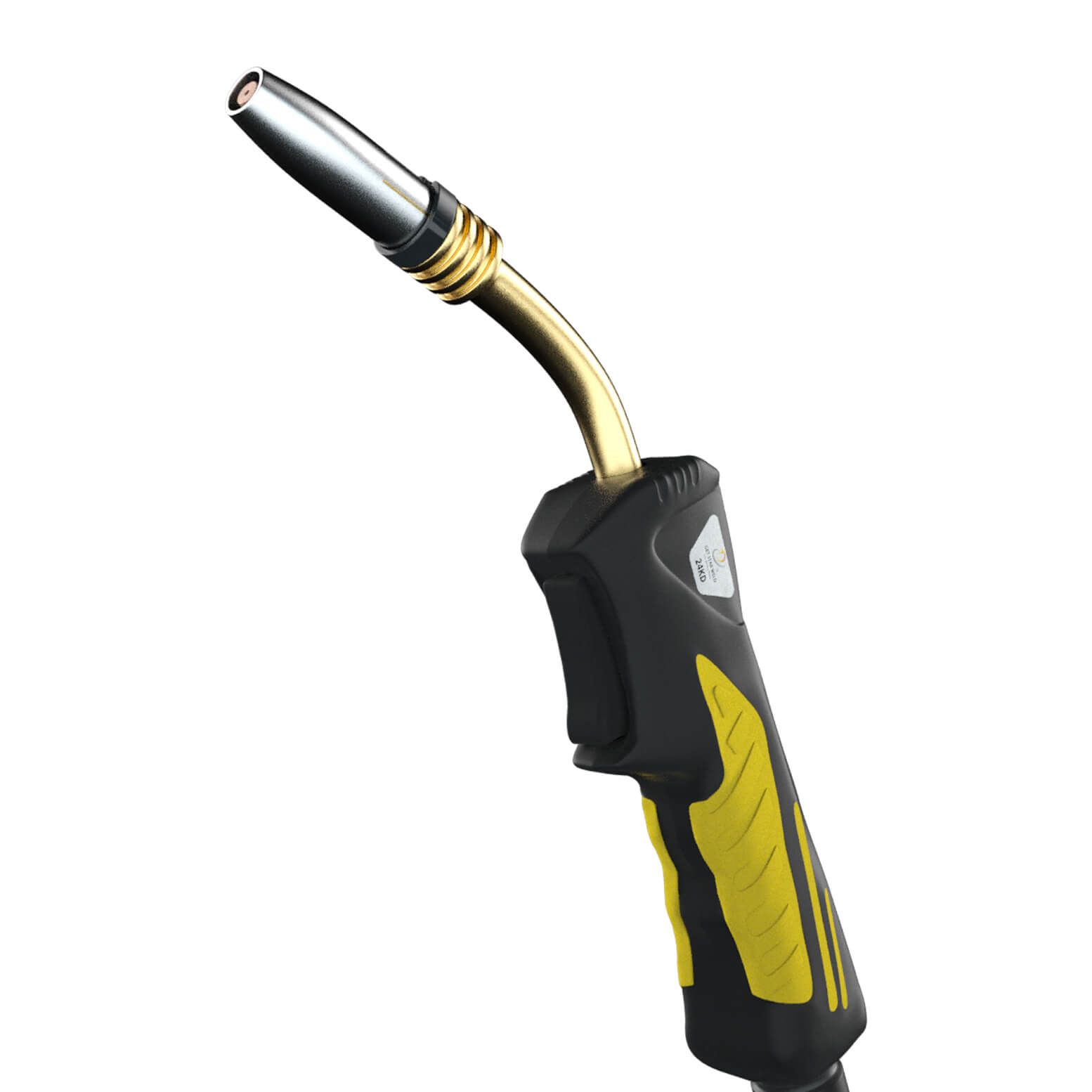
The operational backbone of practically all processes of metal joining and metal cutting that are used in contemporary industrial manufacturing is welding torches. The torch is used in automotive assembly lines, offshore pipelines, aerospace fabrication and structural construction to determine the quality of the weld, the speed of throughput, and the safety of the operators. One of the most pivotal procurement choices in any fabrication operation is the selection of the appropriate welding torch set to match your process, material, and production environment.
This guide focuses on B2B buyers, procurement managers, production engineers, and manufacturing decision-makers, who need specification-level advice that is authoritative. Whether you are sourcing a MIG torch for a large-volume production cell, specifying a TIG torch for precision stainless work, or evaluating a plasma torch cutting machine for profile cutting, every critical consideration is addressed in the sections that follow.
Scope: MIG torches, TIG torches, oxy-acetylene gas torches, plasma cutting torches, components, selection criteria, industrial applications, safety, maintenance and B2B procurement advice.
What Is a Welding Torch?
A welding torch is a handheld or mechanized tool that delivers controlled thermal energy either via electric arc, combustion flame, or ionized plasma to a workpiece, with the purpose of either fusion welding, brazing, cutting or heating. The torch controls the heat source, protects gas, and delivers consumable electrode or wire delivery in a single integrated assembly.
Welding Torch vs. Cutting Torch
Although the terms are sometimes used interchangeably, welding torches are optimised to metal fusion (joining), whereas cutting torches, including oxy-fuel and plasma varieties, are designed to separate metals. Most industrial facilities have both types together as a complete welding supplies inventory.
Why Torch Selection Is Strategically Critical
- Measures the quality of the weld, penetration profile and bead geometry directly.
- Manages continuous production to capacity and duty cycle.
- Impacts consumable cost, maintenance period, and overall cost of ownership.
- Should be electrically compatible with either an MIG welder or TIG welder.
- Influences operator ergonomics, fatigue and compliance with occupational safety.
Welding Torch Types: Complete Industrial Breakdown.
MIG Torch (Metal Inert Gas / GMAW)
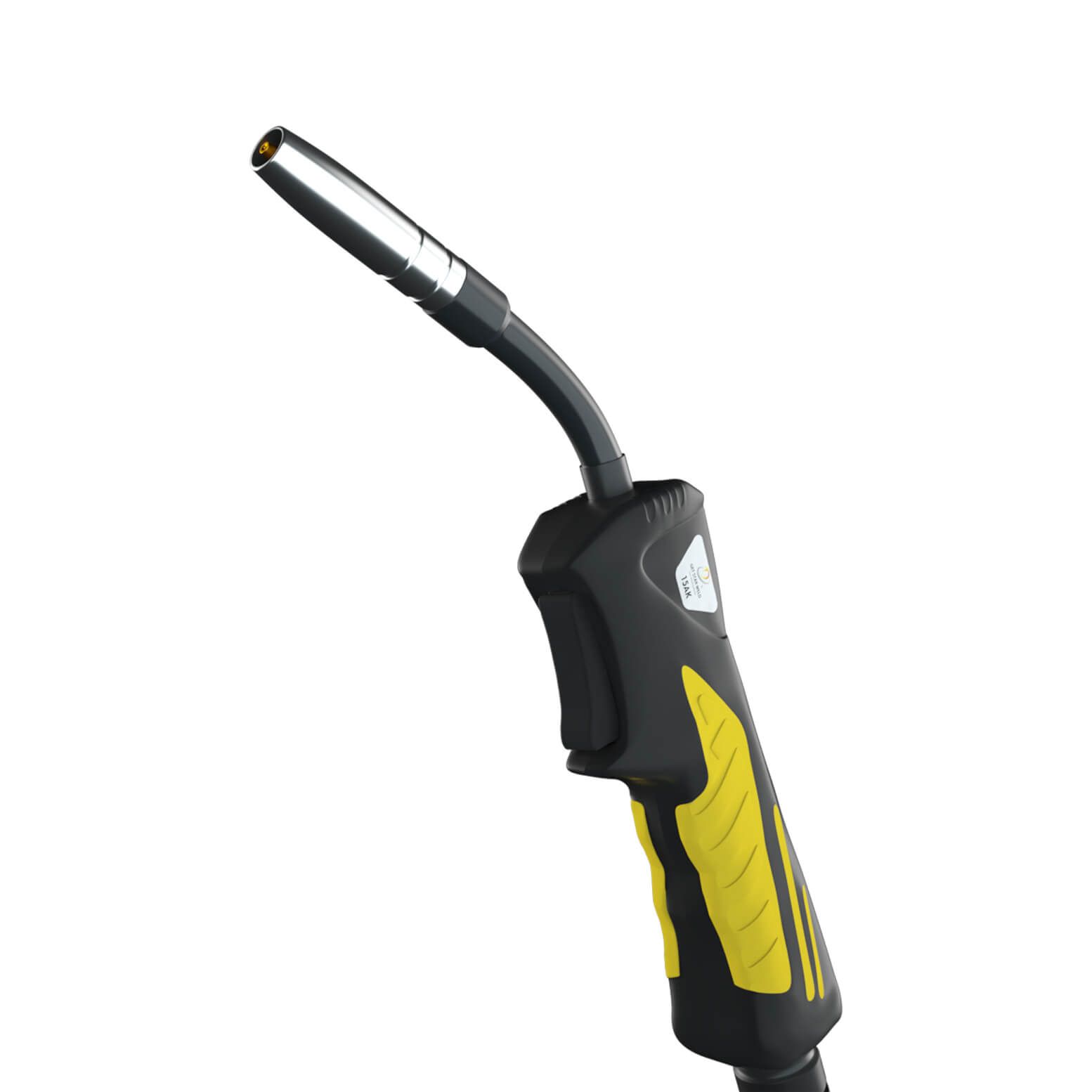
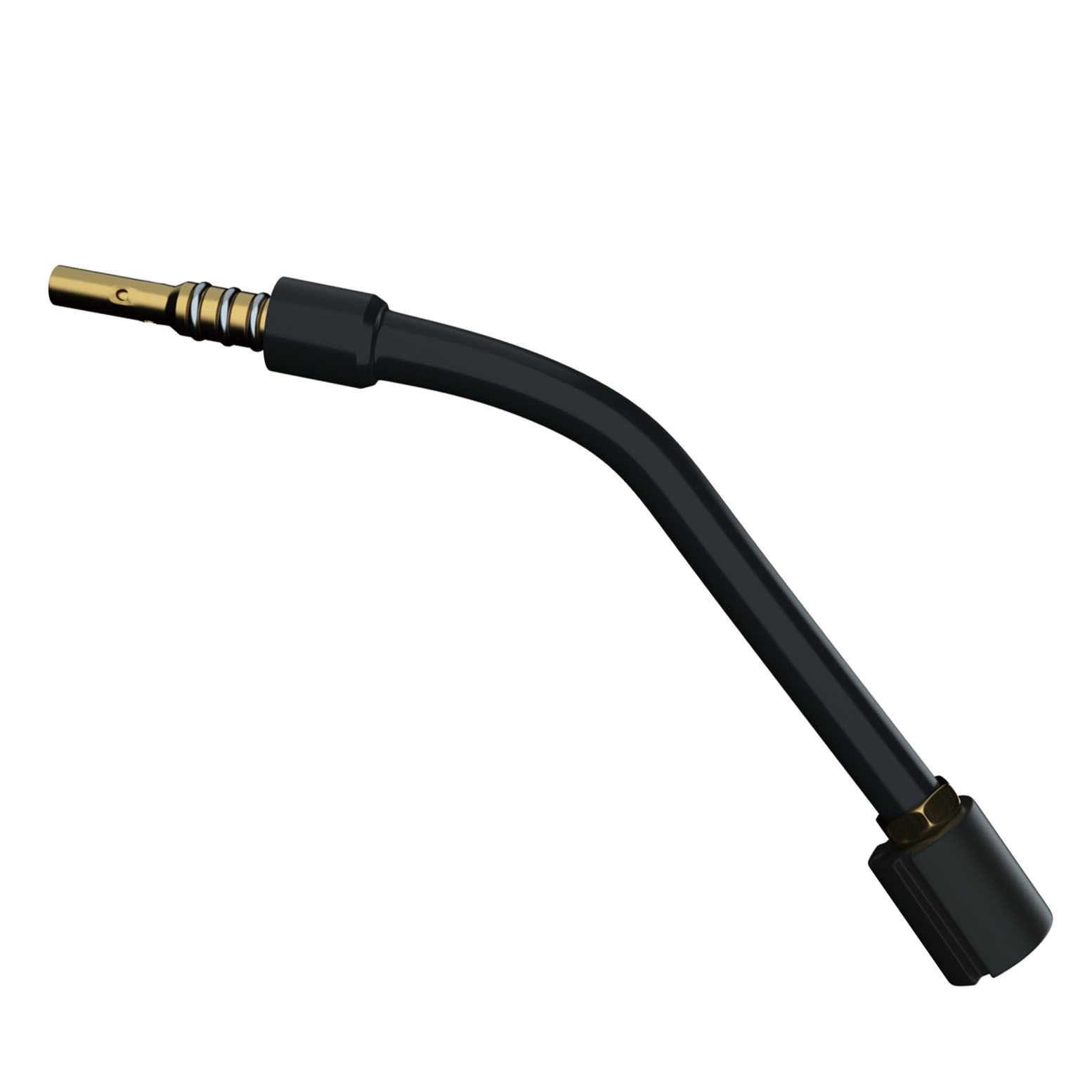
The MIG torch is the most common type of torch used in industrial production setups. It supplies an unending consumable wire electrode through the contact tip and is also involved in the delivery of shielding gas - usually argon/CO 2 mixture - to prevent the weld pool from being contaminated by the atmosphere.
Key Configurations:
- Air-cooled MIG torch - used in the highest duty cycles, about 60%: lower capital cost; used in job shops and light fabrication.
- Water-cooled MIG torch - used in continuous production (350–600A) with high amperage; necessary in robotic welding cells and automated lines.
- Push-pull torch - used on soft aluminum wire to remove bird-nesting in longer cable assemblies.
Compatibility Note:
Pairing of MIG Welder: It is important to verify the type of torch connector (Euro, Tweco, or Dinse) and the value of the amperage before purchasing the MIG welder power source. The most frequent sourcing mistake in buying a MIG torch is mismatched connectors.
TIG Torch (Tungsten Inert Gas / GTAW)
The TIG torch is a device that uses a non-consumable tungsten electrode to generate the arc and adds filler material at a separate stage by the operator. This process offers the best possible weld quality, best arc control and best aesthetic finish, hence making it the choice of aerospace, food-grade and precision fabrication.
- Rigid TIG torch - maximum transfer of amperage; ideal on bench welding.
- Flex-head TIG torch - adjustable head position; necessary with out-of-position and confined-space joints.
- Water-cooled TIG torch - needed above 200A to operate continuously.
- Gas lens assembly - generates laminar shielding gas flow; significantly enhances the quality of the weld on reactive metals.
TIG Welder Pairing: Before placing an order, check the TIG welder specs to ensure that the torch amperage rating, HF start compatibility, and gas/water hose configuration are all correct.
Oxy-Acetylene Gas Welding Torch
The gas welding torch is an acetylene and oxygen mixture that is used to produce a high-temperature flame (up to 3,500 C). Although mostly replaced in structural welding by MIG and TIG, oxy-acetylene torches are still used in brazing, heating of pipes, metal forming, and field repair operations.
- Neutral flame - used in general welding of steel and copper.
- Carburizing flame - used for hard-facing and for surface enrichment of carbon.
- Oxidizing flame - for brass and bronze brazing.
Gas Regulator Note: A properly rated welding gas regulator of each type of gas (acetylene and oxygen) is required. Oxygen regulators and acetylene regulators are not interchangeable - improper installation poses a serious safety risk.
Plasma Cutting Torch
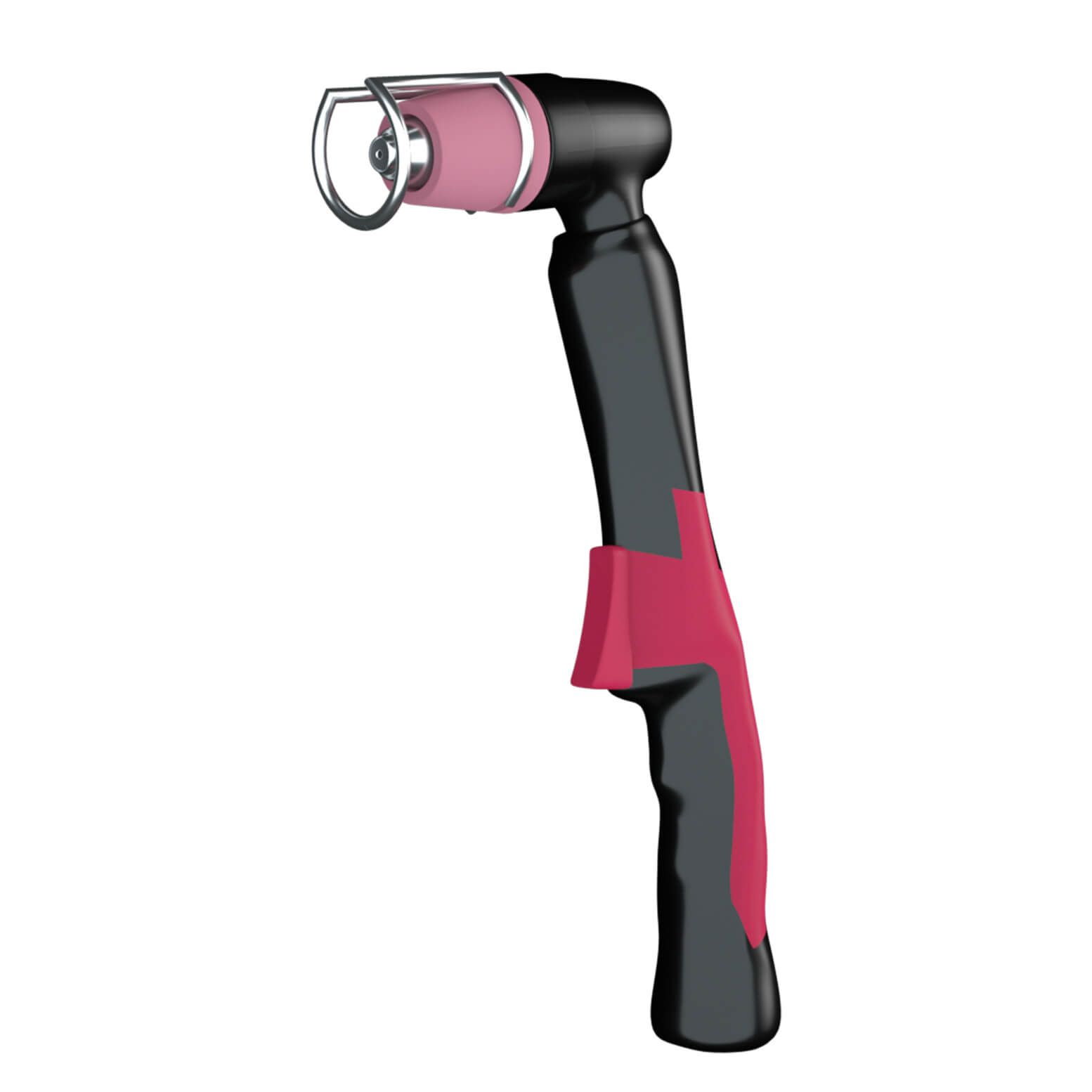
The plasma torch cutting machine is a cutting machine that uses an ionized gas column (plasma) accelerated through a constricted nozzle to cut electrically conductive metals at unprecedented speed and precision. In most contemporary sheet metal fabrication plants, oxy-fuel cutting has been replaced by plasma cutting.
- Handheld plasma torch - used to cut, gouge and prepare bevels manually.
- Mechanized/CNC plasma torch - used to cut profiles automatically, nest and in high-volume production.
- High-definition plasma - creates a virtually laser-quality edge finish on mild steel and stainless.
Important consumables: electrode, nozzle, swirl ring, shield cap - can be replaced by wear.
Specialty Torches
- Spot welding torch - resistance welding used to stack metal sheets (automotive body shops)
- Laser welding torch - fiber-delivered laser to achieve ultra-high-precision thin-material joining.
- Underwater wet welding torch - marine and offshore pipeline repair.
- Exothermic cutting torch - demolition and salvage operations.
Anatomy of a Welding Torch: Key Components
The sub-assembly layout of an industrial welding torch is critical to maintenance planning, consumable ordering and fault diagnosis.
|
Component
|
Function & Specification Notes
|
|
Torch Body / Handle
|
House interior gas/power track; ergonomic grip; heat-resistant thermoplastic or aluminum alloy construction.
|
|
Contact Tip (MIG)
|
Transfers welding current onto the wire, copper or chrome-zirconium, to the wire diameter (0.61.6 mm).
|
|
Gas Nozzle
|
Covers the weld pool with shielding gas; cylindrical or tapered; ceramic (TIG) or copper (MIG).
|
|
Tungsten Electrode (TIG)
|
Non-consumable arc source; grade and diameter determined by amperage and type of base metal.
|
|
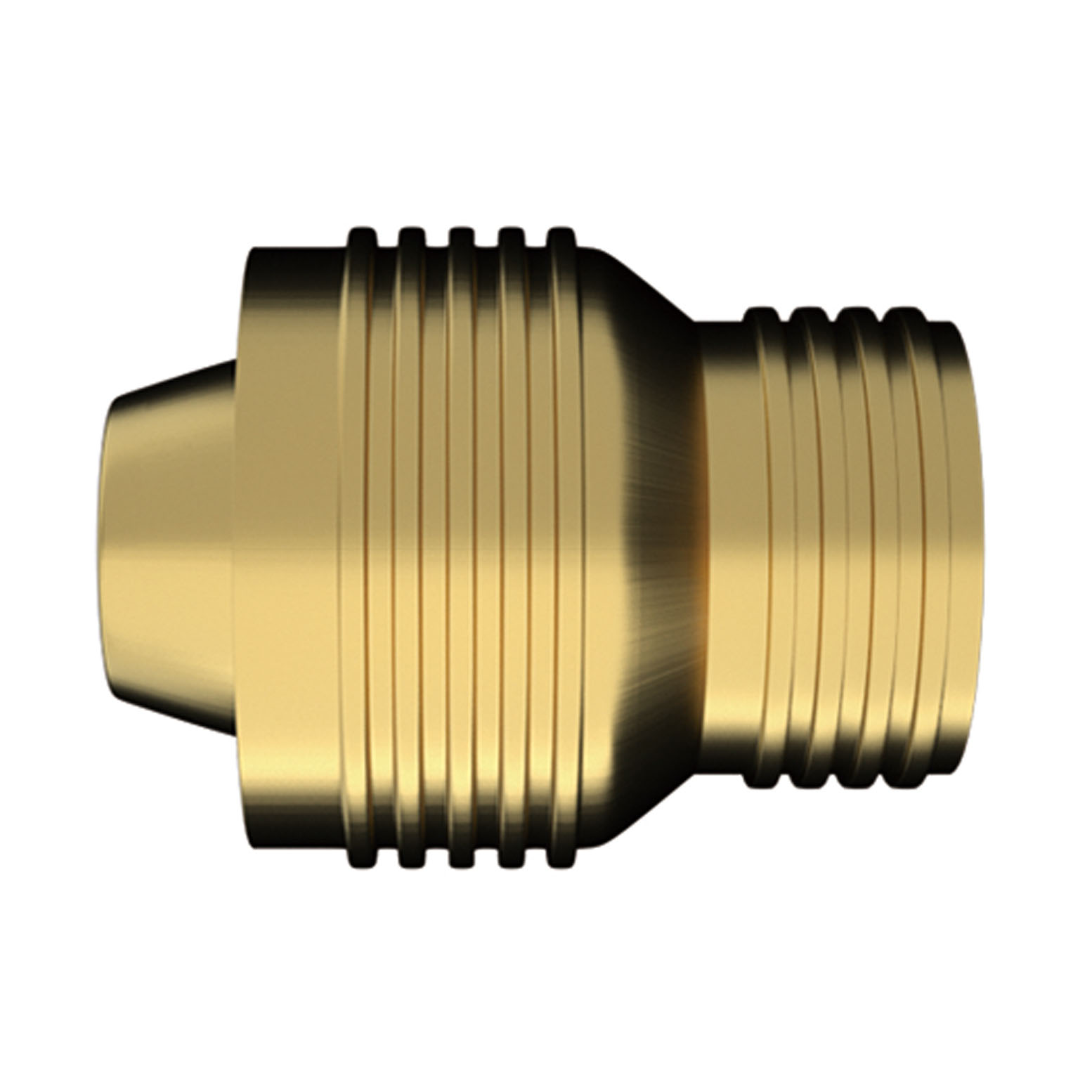
Collet & Collet Body (TIG)
|
Clamps and centers for tungsten should be an exact match to the electrode diameter.
|
|
Liner (MIG)
|
Wire conduit between drive rolls and contact tip; steel (hard wire) or PTFE (aluminum wire).
|
|
Cable Assembly
|
Transfers current, gas, and (when water-cooled) coolant; the specified OEM bend radius is important.
|
|
Welding Gas Regulator
|
Pressure-reduces cylinder gas to torch working pressure; dual-stage preferred for precision gas flow control
|
|
Cooling System
|
Air-cooled: passive convection; water-cooled: closed-loop coolant circuit; determines max duty cycle
|
Industrial Applications by Sector
Automotive & Electric Vehicle Manufacturing
- MIG torch (robotic and manual) to join body panels, assemble frames and fabricate battery enclosures.
- Spot welding torches are used in sheet metal stacking on high-volume stamping lines.
- Plasma cutting machine for precision blanking of aluminum and AHSS components.
Oil & Gas - Pipelines and Refineries
- TIG torch to pass the root on carbon steel and stainless pipeline girth welds (compliant with ASME B31.3)
- Orbital TIG welding torch for automated and repeatable pipe-to-pipe fusion.
- Field heating, preheating, and PWHT of gas welding torches in remote areas.
Shipbuilding & Offshore Structures
- MIG heavy-duty torches are used in the fabrication of thick-plate and T-joints.
- Flux-core welding torches are used to weld out-of-position on vertical and overhead joints.
- Oxy-fuel and plasma torches to cut steel plate and profile shapes.
Aerospace & Defence
- High-frequency titanium, Inconel, and aerospace aluminum alloy TIG torches.
- Stringent amperage regulation and inert gas purity standards - argon or helium shielding.
- Water-cooled TIG torch sets are obligatory when long, accurate weld runs are necessary.
Construction & Structural Steel
- MIG and flux-core torches to use on-site in connecting structural components and plate girder manufacture.
- Oxy-acetylene-spent torches were used to heat the site, remove bolts, and also repair the structure.
- Plasma cutting machines are used to cut beams to cope, plates to profile and studs to prepare.
Metal Fabrication Job Shops
- Multi-process welding torch sets with MIG/TIG/plasma capabilities in one investment.
- High torch versatility is needed in mixed material and mixed-thickness workloads.
Welding Torch Selection Guide for Industrial Buyers
Follow this six-step decision model to define what welding torch or welding torch set you need to use.
Step 1 - Define the Welding Process
- GMAW (MIG): high speed, average quality, can be used on carbon steel, stainless, and aluminum.
- GTAW (TIG): best quality, slowest speed, all metals, including exotic alloys.
- Plasma cutting: fastest cut speed on 0.5–50mm conductive metals
- Oxy-acetylene: heating, brazing, thin sheet, field repair
Step 2 - Match Amperage to Base Metal Thickness
|
Material Thickness
|
Recommended Amps
|
Torch Class
|
Cooling
|
|
Up to 3mm
|
60–150A
|
Light-duty MIG/TIG
|
Air-cooled
|
|
3–10mm
|
150–250A
|
Mid-range MIG/TIG
|
Air-cooled
|
We are ready to build your dream tell us more about your
project
Lorem ipsum dolor sit amet, consectetur adipiscing elit. Suspendisse viverra mauris eget
tortor.